
Table of Contents
- What is OTA Testing?
- Importance of OTA Testing
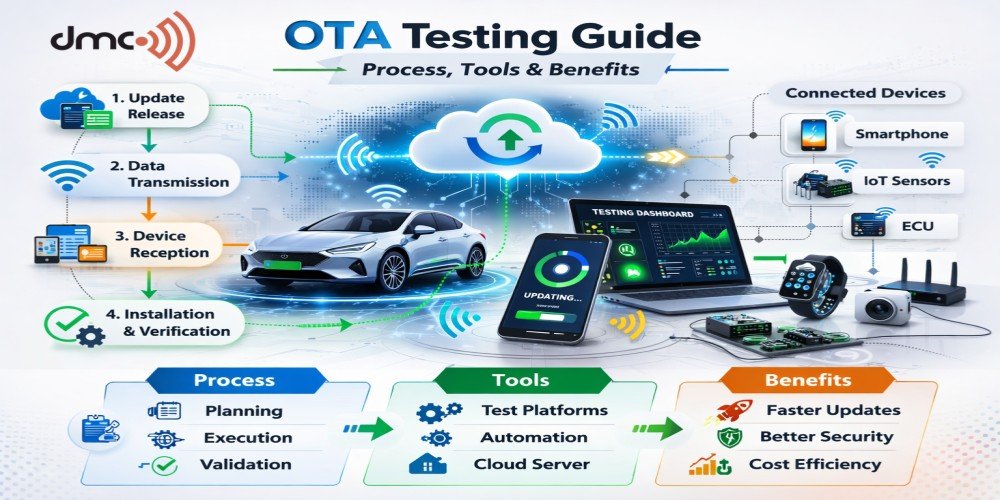
- OTA Testing Process
- OTA Testing in Automotive Industry
In today’s connected world, OTA testing (Over The Air testing) plays a vital role in ensuring seamless software updates across devices. From smart vehicles to IoT-enabled systems, businesses rely on OTA software testing to deliver updates remotely without physical intervention.
With increasing demand for faster updates and improved user experience, OTA updates testing ensures that software upgrades are secure, reliable, and efficient. This blog explains the importance, process, types, and benefits of OTA testing in a clear and SEO-friendly manner.
What is OTA Testing?
OTA testing refers to the process of validating software updates delivered wirelessly to devices such as:
- Connected cars
- IoT devices
- Smartphones
- Industrial systems
The goal of over the air testing is to ensure that updates are successfully downloaded, installed, and executed without errors.
It also ensures that updates:
- Do not break existing functionality
- Maintain device performance
- Protect against security vulnerabilities
Importance of OTA Testing
Ensures Reliable Updates
OTA testing guarantees that updates work correctly across different devices and environments.
Enhances Security
Wireless updates are exposed to risks. OTA software testing ensures secure transmission using encryption and authentication.
Improves User Experience
Failed updates can cause system crashes. Proper OTA updates testing ensures smooth installations.
Reduces Costs
In industries like automotive, automotive OTA testing eliminates costly recalls and service visits.
OTA Testing Process
A structured OTA testing process ensures successful deployment of updates.
1. Requirement Analysis
Define update goals, supported devices, and performance criteria.
2. Test Environment Setup
Simulate real-world network conditions like low bandwidth and interruptions.
3. Update Deployment Testing
Check download speed, update delivery, and data integrity.
4. Installation Testing
Ensure updates install correctly and validate rollback mechanisms.
5. Post-Update Validation
Verify system performance, bug fixes, and feature functionality.
6. Security Testing
Ensure encryption, authentication, and protection against cyber threats.
Types of OTA Testing
| Testing Type | Description |
|---|---|
| Functional Testing | Verifies features after OTA updates |
| Performance Testing | Checks system speed and responsiveness |
| Security Testing | Ensures safe and encrypted update delivery |
| Compatibility Testing | Tests updates across devices and OS versions |
| Regression Testing | Ensures new updates don’t affect existing features |
| Network Testing | Simulates real-world network conditions |
OTA Testing in Automotive Industry
Automotive OTA testing is essential for modern vehicles that rely on software for:
- Engine control systems
- Infotainment systems
- ADAS (Advanced Driver Assistance Systems)
OTA testing ensures:
- Vehicle safety is maintained
- Updates do not disrupt critical functions
- Compliance with industry standards
It allows manufacturers to fix bugs and add features without requiring customers to visit service centers.
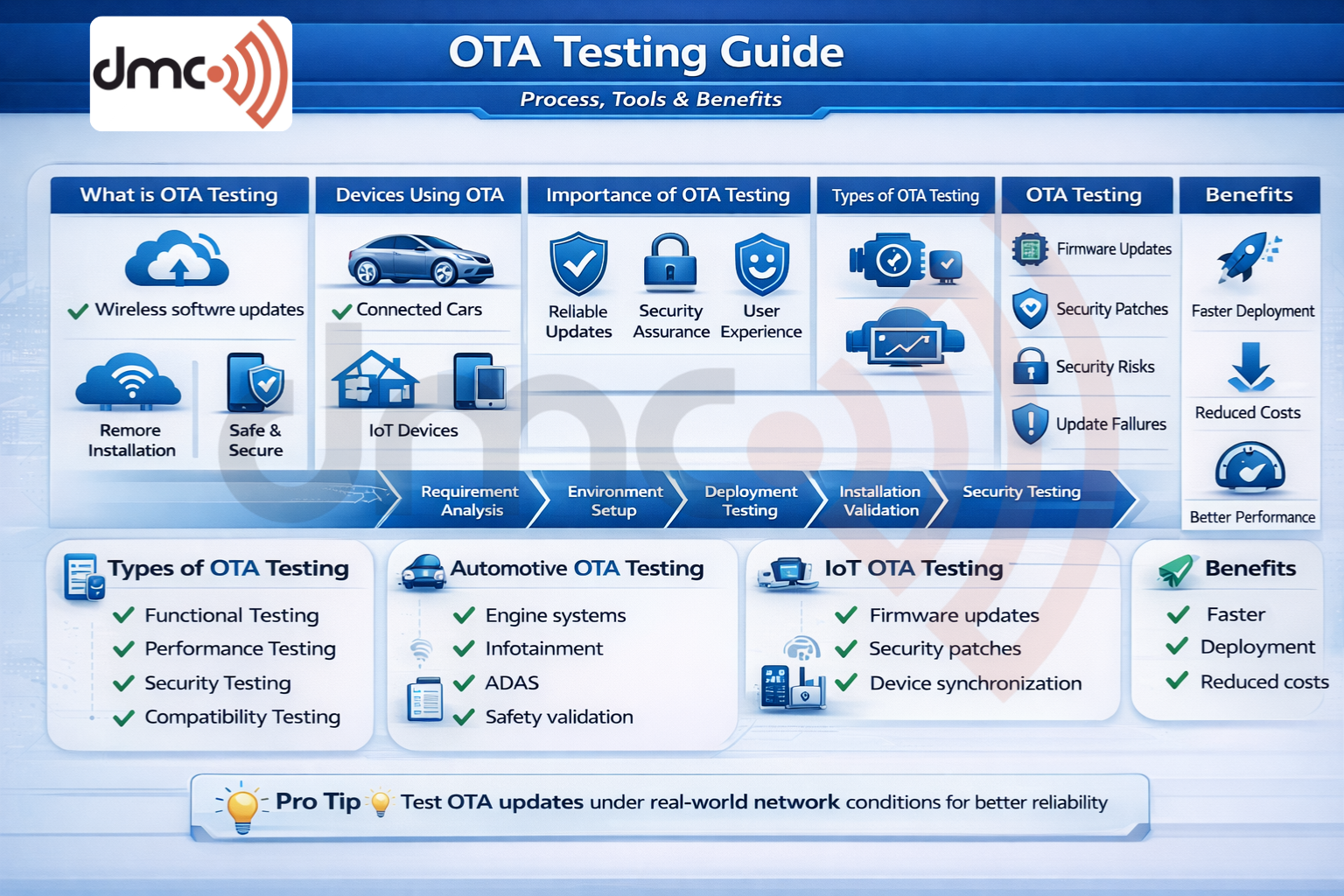
OTA Testing in IoT Devices
In IoT ecosystems, IoT OTA testing ensures reliable firmware updates for connected devices.
These updates are crucial for:
- Security patches
- Feature enhancements
- Performance improvements
Firmware OTA testing helps maintain consistency across multiple devices and enables remote management.
Challenges in OTA Testing
⚠️ Network Variability
Devices may receive updates under unstable network conditions.
⚠️ Device Fragmentation
Different hardware and software versions increase complexity.
⚠️ Security Risks
OTA updates can be targeted by cyber attacks.
⚠️Update Failures
Interruptions during updates can cause failures or system crashes.
OTA Testing Tools
Various OTA testing tools help improve efficiency and accuracy:
- Network simulation tools
- Automation testing frameworks
- Firmware validation tools
- Cloud-based testing platforms
These tools help simulate real-world conditions and automate repetitive tasks.
Benefits of OTA Testing
- Faster software deployment
- Improved product lifecycle management
- Enhanced customer satisfaction
- Reduced operational and maintenance costs
- Better compliance with safety standards
Pro Tip
Always test OTA updates under real-world network conditions.
Simulating poor connectivity, signal drops, and interruptions ensures that updates remain stable even in challenging environments.
OTA testing is a critical component in modern software deployment strategies. As industries move toward connected ecosystems, over the air testing ensures that updates are secure, reliable, and efficient.
From automotive systems to IoT devices, OTA software testing helps businesses deliver seamless updates, improve performance, and enhance user experience. Investing in a strong OTA testing process is essential for long-term product success.
Frequently Asked Questions
1. What is OTA testing?
OTA testing validates wireless software updates to ensure they are secure and reliable.
2. Why is OTA testing important?
It ensures safe updates, improves performance, and prevents system failures.
3. What is automotive OTA testing?
It tests wireless updates in vehicles to ensure safety and system stability.
4. What are OTA testing tools?
Tools used for automation, network simulation, and firmware validation.
5. Which industries use OTA testing?
Automotive, IoT, telecom, healthcare, and electronics industries use OTA testing.