
Table of Contents
- What is EMI in Electric Vehicles?
- What is an Anechoic Chamber?
- Why Anechoic Chambers are Essential for EV EMI Testing
- Types of Anechoic Chambers Used in EV Testing
- Challenges in EV EMI Testing
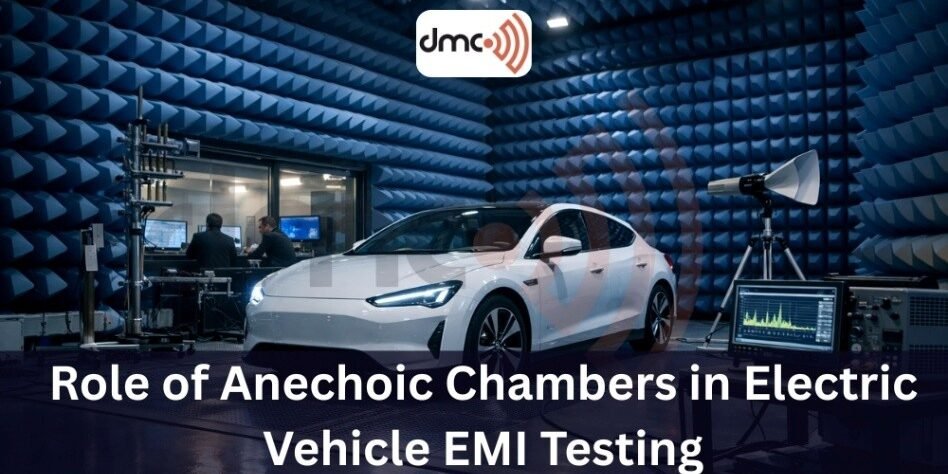
Anechoic chambers are specialized,shielded rooms lined with radio-frequency (RF) absorbing materials that eliminate external electromagnetic interference (EMI) and prevent internal reflections. They provide a controlled, noise-free environment essential for validating that Electric Vehicle (EV) components comply with strict EMC standards (e.g., CISPR25).
Anechoic chambers play a pivotal role in ensuring EVs meet stringent electromagnetic compatibility (EMC)
standards. These specialized testing environments allow engineers to evaluate and control electromagnetic
emissions in a highly controlled setting. Let’s explore how anechoic chambers contribute to reliable EMI
testing in electric vehicles.
What is EMI in Electric Vehicles?
Electromagnetic interference (EMI) refers to unwanted electromagnetic signals that disrupt the normal
operation of electronic systems. EVs, with their high-voltage batteries, power electronics, inverters,
and advanced communication systems, are particularly susceptible to EMI issues.
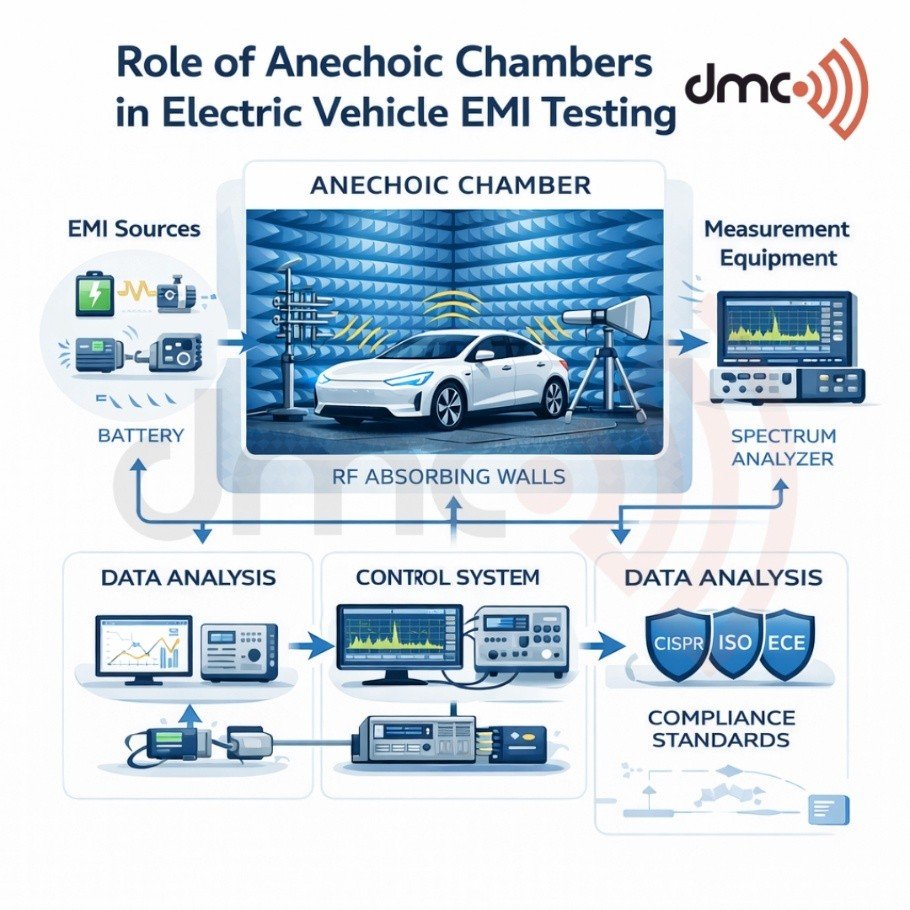
Common EMI sources in EVs include:
- Battery management systems
- Electric motors and inverters
- Charging systems
- Infotainment and communication modules
If not properly controlled, EMI can interfere with critical systems such as braking, steering, and
driver assistance technologies.
What is an Anechoic Chamber?
An anechoic chamber is a specially designed room that absorbs electromagnetic waves, preventing
reflections and external interference. These chambers simulate a free-space environment, enabling
accurate measurement of emissions and immunity.
Key characteristics include:
- RF-absorbing materials on walls, ceiling, and floor
- Shielded enclosure to block external signals
- Minimal signal reflection for precise measurements
In EV testing, anechoic chambers are essential for isolating the vehicle from environmental noise and
ensuring repeatable, reliable results.
Why Anechoic Chambers are Essential for EV EMI Testing
1. Accurate Measurement of Emissions
Anechoic chambers eliminate reflections that could distort measurement data. This allows engineers to
precisely quantify electromagnetic emissions from EV components.
2. Controlled Testing Environment
External electromagnetic noise from sources like mobile networks or nearby equipment can skew results.
Anechoic chambers provide a controlled environment free from such disturbances.
3. Compliance with Standards
EV manufacturers must comply with global EMC standards such as:
- CISPR 25
- ISO 11452
- UNECE R10
Anechoic chambers ensure testing conditions meet these regulatory requirements.
4. Repeatability and Consistency
Testing must be repeatable across multiple trials. Anechoic chambers provide consistent conditions,
ensuring reliable comparisons and validation.
5. Safety Assurance
By identifying EMI issues early, manufacturers can prevent failures in critical systems, enhancing
overall vehicle safety.
Types of Anechoic Chambers Used in EV Testing
Different testing needs require different types of chambers. Below is a comparison:
| Type of Chamber | Description | Applications in EV Testing |
|---|---|---|
| Semi-Anechoic Chamber | Absorbers on walls and ceiling, reflective floor | Radiated emissions testing |
| Fully Anechoic Chamber | Absorbers on all surfaces | High-precision RF testing |
| Reverberation Chamber | Reflective surfaces with stirring mechanisms | Immunity testing |
| Shielded Room | Blocks external signals but lacks absorption | Pre-compliance testing |
Key Components Tested in Anechoic Chambers
During EMI testing, several EV components are evaluated:
Battery Systems
High-voltage batteries can generate electromagnetic noise that affects nearby electronics.
Power Electronics
Inverters and converters switch high currents, making them major EMI sources.
Charging Systems
Both onboard and external chargers must comply with EMI regulations.
ADAS and Communication Systems
Advanced driver assistance systems rely on clean signal transmission, making EMI testing critical.
Testing Procedures in Anechoic Chambers
The EMI testing process typically includes:
1. Radiated Emissions Testing
Measures electromagnetic energy emitted from the vehicle.
2. Conducted Emissions Testing
Evaluates interference transmitted through electrical connections.
3. Immunity Testing
Assesses how well the vehicle withstands external electromagnetic disturbances.
4. Pre-Compliance Testing
Early-stage testing to identify potential issues before formal certification.
Challenges in EV EMI Testing
Despite their advantages, using anechoic chambers presents certain challenges:
- High Cost: Construction and maintenance of chambers are expensive
- Complex Setup: Requires precise calibration and instrumentation
- Space Requirements: Large chambers are needed for full vehicle testing
- Evolving Standards: Rapid EV innovation demands continuous updates to testing protocols
Future Trends in Anechoic Chamber Testing for EVs
As EV technology evolves, so do testing requirements. Emerging trends include:
- Higher Frequency Testing: With 5G and advanced connectivity
- Automation in Testing: AI-driven data analysis and testing procedures
- Compact Chambers: For component-level testing
- Integration with Simulation Tools: Combining physical and virtual testing
Pro Tip
Always perform pre-compliance EMI testing early in the EV development cycle.This helps identify interference issues before final certification, saving both time and significant
redesign costs.
Anechoic chambers are indispensable in the development and validation of electric vehicles. By providing a
controlled, interference-free environment, they ensure accurate EMI testing, regulatory compliance, and
enhanced vehicle safety.
As EV technology continues to advance, the importance of robust EMI testing will only grow. Investing in
high-quality anechoic chamber testing is not just about compliance—it’s about delivering reliable, safe, and
high-performing electric vehicles to the market.
Frequently Asked Questions