
Table of Contents
- Understanding EMC Workflow in Modern Electronics
- Pre-Design Planning for EMC Success?
- Engineering Design Strategies for EMC Control
- Validation Through Pre-Compliance Testing
Understanding EMC Workflow in Modern Electronics
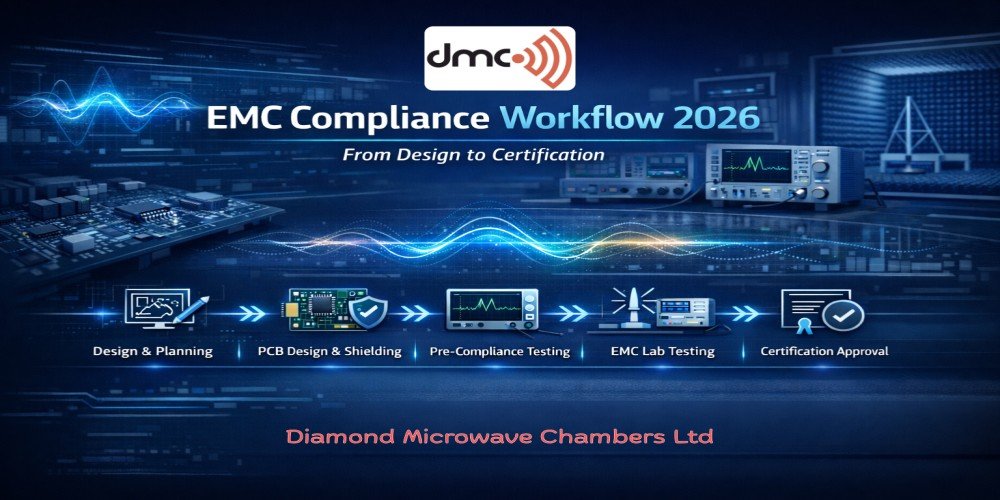
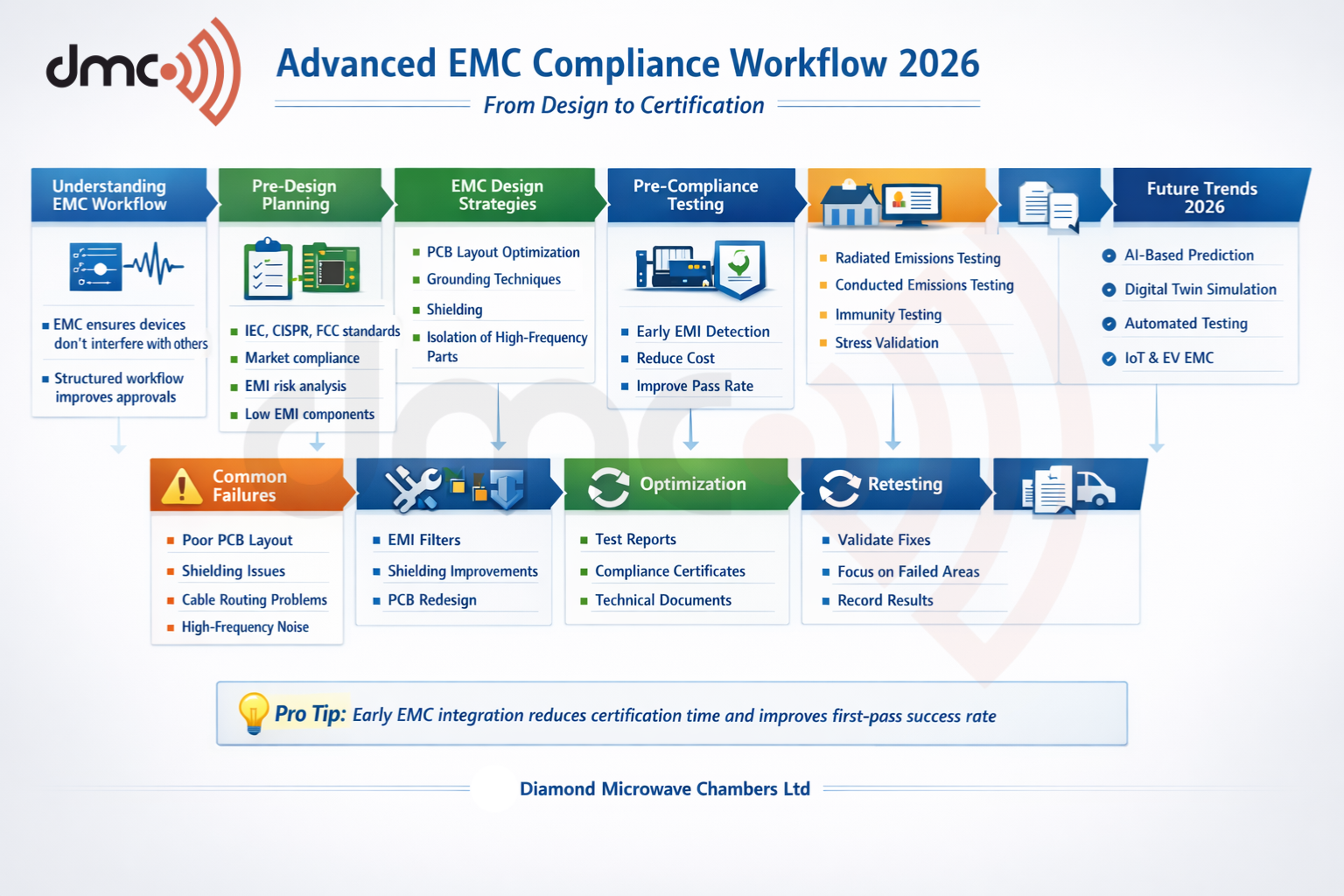
In 2026, the EMC compliance workflow has become an essential part of product development. Modern electronic devices must pass strict electromagnetic compatibility testing to ensure they do not interfere with other systems. This structured workflow helps manufacturers achieve faster approvals and maintain product quality.
Key Elements of EMC Workflow:
- Requirement identification based on EMC testing standards 2026
- Early-stage design validation using EMC design guidelines
- Continuous testing and optimization
- Final EMC certification process
Pre-Design Planning for EMC Success?
Effective planning is the foundation of successful EMC testing process implementation. Before development begins, engineers must identify applicable standards and compliance requirements.
What to Plan in Advance:
- Applicable standards such as IEC, CISPR, and FCC
- Target market compliance requirements
- Risk analysis for Electromagnetic interference (EMI)
- Selection of components that reduce EMI
This stage helps reduce failures in later EMC testing lab certification.
Engineering Design Strategies for EMC Control
Design plays a crucial role in reducing EMI EMC testing failures. Poor design can lead to repeated issues during compliance testing.
Important Design Techniques:
- Optimized PCB layout for PCB design for EMC
- Proper grounding and return path control
- Shielding to reduce electromagnetic radiation
- Isolation of high-frequency components
Applying these EMC design guidelines ensures better performance.
Validation Through Pre-Compliance Testing
Pre-compliance testing is an essential part of the EMC testing process. It allows early detection of issues before final certification.
Benefits of Pre-Testing:
- Identify EMI issues early
- Improve success rate in process
- Reduce overall testing costs
- Enhance product reliability
This step is critical for minimizing failures in radiated emissions testing.
Certification Testing: Ensuring Global Compliance
Final testing is conducted in certified labs to verify compliance with global standards. This stage confirms whether the product meets electromagnetic compatibility testing requirements.
Tests Performed During Certification:
- Radiated emissions testing for wireless interference
- Conducted emissions testing through cables
- Immunity testing against ESD and RF signals
- Performance validation under stress conditions
Passing this stage ensures successful EMC testing lab certification.
Documentation and Compliance Approval
Proper documentation is required to complete the EMC certification process and gain regulatory approval.
Required Documentation:
- EMC test reports
- Technical construction files
- Compliance certificates
- Detailed testing records
Accurate documentation speeds up approvals and avoids compliance delays.
Common Failure Points in EMC Testing
Many products fail due to overlooked issues in EMI EMC testing. Identifying these problems early improves success rates.
Frequent Failure Reasons:
- Poor PCB layout affecting EMC testing process
- Lack of shielding causing interference
- Cable routing issues
- High-frequency noise from components
Understanding these issues helps in applying effective EMI reduction techniques.
Optimization Techniques After Test Failures
When a product fails, targeted improvements are needed to pass the EMC certification process.
Effective Optimization Methods:
- Use of EMI filters and ferrites
- Improved shielding techniques
- PCB redesign for better EMC performance
- Noise reduction at the source
These methods enhance performance in conducted emissions testing.
Retesting and Final Validation Strategy
Retesting ensures that all fixes are effective and the product meets compliance standards.
Smart Retesting Approach:
- Focus on failed parameters
- Use simulation tools for validation
- Maintain testing records
- Confirm compliance across all scenarios
This improves success in final electromagnetic compatibility testing.
Future-Ready EMC Strategies for 2026
The future of EMC testing standards 2026 is driven by new technologies and automation.
Key Future Strategies:
- AI-based EMC failure prediction
- Automated testing systems
- Digital twin simulation
- IoT and EV-focused EMC testing
These innovations improve efficiency and accuracy.
Improving Efficiency in EMC Lifecycle
Optimizing the EMC compliance workflow 2026 helps reduce time-to-market and cost.
Ways to Improve Efficiency:
- Integrate EMC early in product design
- Use simulation before physical testing
- Automate repetitive processes
- Work with certified EMC labs
Pro Tip
Integrating EMC testing process early in the design phase can significantly reduce certification time and improve first-pass success rates.