
Table of Contents
- What is EMI/EMC Testing in Electric Vehicles?
- Why EV EMI/EMC Testing is Important
- Types of EV EMI/EMC Testing
Electric vehicles (EVs) are revolutionizing the automotive industry with advanced electronics and clean
energy systems. However, with increasing electronic complexity comes the risk of electromagnetic
interference (EMI).
This is where EV EMI/EMC testing becomes essential.
Electric Vehicle Electromagnetic Compatibility (EMC) testing ensures that all electronic components in
EVs work efficiently without causing or being affected by electromagnetic disturbances.
In this SEO-optimized guide, we will cover everything about EMI/EMC testing for EVs, including its
importance, standards, testing methods, process, and benefits.
What is EMI/EMC Testing in Electric Vehicles?
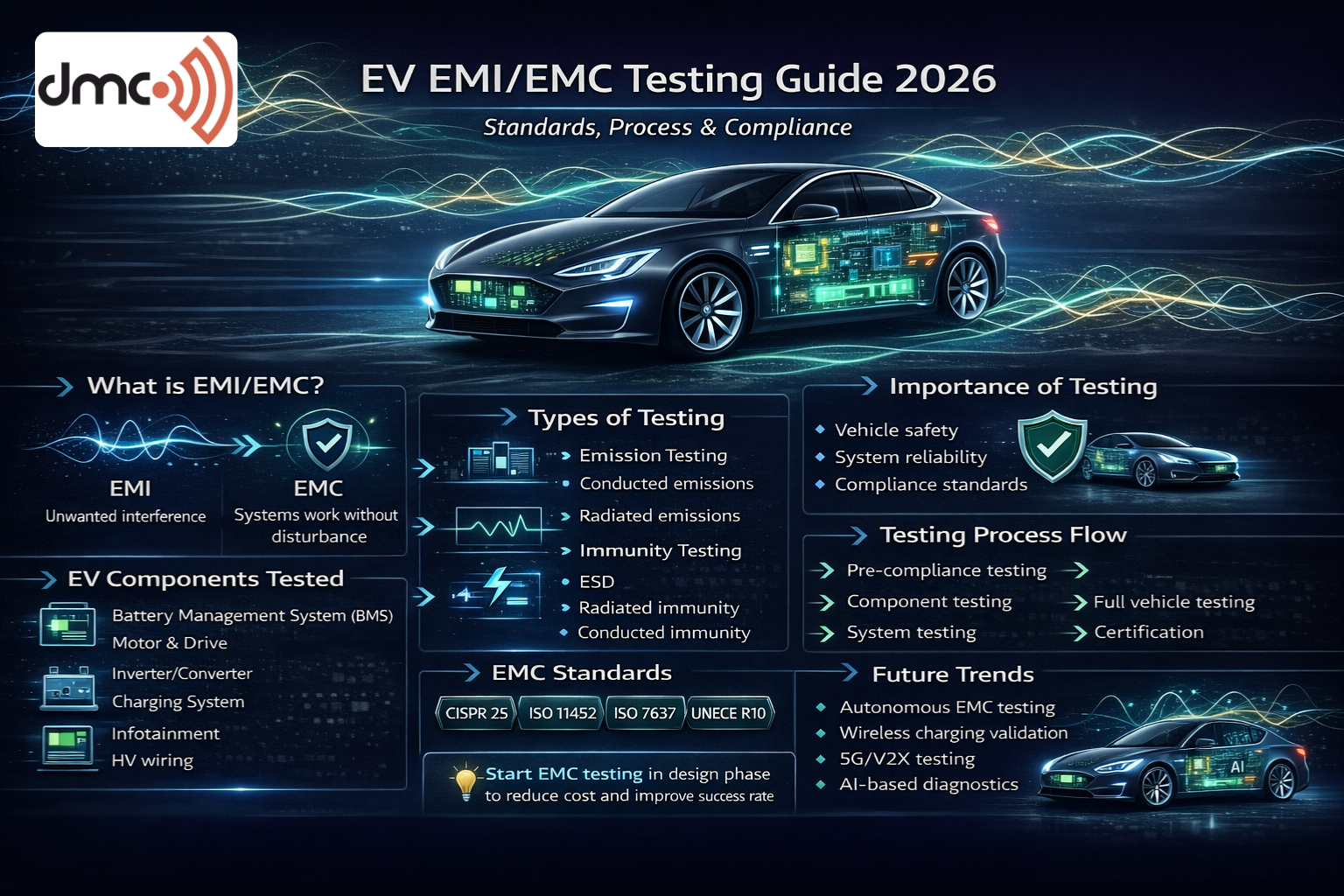
EMI (Electromagnetic Interference)
EMI refers to unwanted electrical signals that disrupt the normal functioning of electronic systems in an
EV.
EMC (Electromagnetic Compatibility)
EMC ensures that:
- EV systems do not emit excessive interference
- EV components function correctly in electromagnetic environments
In simple terms, EMC means reliable performance without interference.
Why EV EMI/EMC Testing is Important
With multiple high-voltage and electronic systems integrated into EVs, EMI/EMC testing is critical for:
- Ensuring vehicle safety
- Preventing system failures
- Meeting automotive EMC compliance standards
- Avoiding interference with nearby devices
- Enhancing vehicle reliability
Key Benefits of EMC Testing for EVs
- Regulatory approval for global markets
- Improved electronic performance
- Reduced risk of malfunction
- Better user experience
- Long-term durability
Key EV Components That Require EMC Testing
Electric vehicles consist of multiple systems that must undergo EMI/EMC testing:
- Battery Management System (BMS)
- Electric Motor and Drive System
- Inverter and Converter Units
- Onboard Charging System
- Infotainment and Communication Modules
- High-voltage wiring systems
Each component can either generate EMI or be affected by it, making testing essential.
Types of EV EMI/EMC Testing
1. Emission Testing
Measures electromagnetic energy emitted by EV components.
- Conducted Emissions
- Radiated Emissions
2. Immunity Testing
Evaluates how EV systems resist external electromagnetic interference.
- Electrostatic Discharge (ESD)
- Radiated Immunity
- Conducted Immunity
3. Transient Testing
Tests the system’s response to sudden electrical disturbances such as:
- Voltage spikes
- Load dump conditions
- Switching noise
EV EMI/EMC Testing Standards
To ensure compliance, EV manufacturers must follow global EMC standards:
| Standard | Description | Region |
|---|---|---|
| CISPR 25 | Controls radio frequency emissions in vehicles | Global |
| ISO 11452 | Immunity testing methods for vehicles | Global |
| ISO 7637 | Electrical transient testing | Global |
| UNECE R10 | Vehicle EMC certification regulation | Europe |
| SAE J551 | EMC standards for automotive systems | USA |
These standards ensure EVs meet global safety and performance benchmarks.
EV EMI/EMC Testing Process
A structured testing process ensures complete compliance:
1. Pre-Compliance Testing
- Identifies issues early
- Reduces redesign costs
2. Component-Level Testing
- Individual parts tested separately
3. System-Level Testing
- Multiple systems tested together
4. Full Vehicle Testing
- Entire EV evaluated under real conditions
5. Certification & Compliance
- Final approval based on standards
Challenges in EV EMC Testing
EV manufacturers face several technical challenges:
- High-frequency switching noise
- Complex electrical architecture
- Integration of multiple ECUs
- Battery and inverter interference
- Rapid technological evolution
Overcoming these challenges requires advanced EMC testing labs and expertise.
Advantages of EV EMI/EMC Testing
1. Regulatory Compliance
Ensures EVs meet international automotive standards.
2. Enhanced Safety
Prevents failure of critical systems like braking and control units.
3. Improved Performance
Ensures smooth operation of electronic systems.
4. Cost Reduction
Minimizes recalls and warranty claims.
5. Better Customer Experience
Delivers reliable and interference-free performance.
Pro Tip
Start EMI/EMC testing during the EV design phase.
Early testing helps detect issues quickly, saving significant time, cost, and engineering effort.
Future Trends in EV EMC Testing
The future of EV EMI/EMC testing is evolving rapidly:
- Autonomous vehicle EMC validation
- Wireless charging compatibility testing
- 5G and V2X communication testing
- AI-driven EMC diagnostics
- High-voltage system testing
These advancements will ensure EVs remain safe in increasingly connected environments.
EV EMI/EMC testing is a crucial part of electric vehicle development. It ensures safety, compliance, and reliable performance in a highly electronic ecosystem.
As EV adoption continues to grow, manufacturers must prioritize electromagnetic compatibility testing to meet global standards and deliver high-quality vehicles.
By implementing proper testing strategies, companies can build safe, efficient, and future-ready electric vehicles.
Frequently Asked Questions
1. What is EV EMI/EMC testing?
EV EMI/EMC testing ensures that electric vehicles operate without causing or being affected by electromagnetic interference.
2. Why is EMC testing important for electric vehicles?
It ensures safety, compliance with standards, and proper functioning of electronic systems.
3. Which standards are used for EV EMC testing?
CISPR 25, ISO 11452, ISO 7637, and UNECE R10 are widely used..
4. When should EV EMI testing be done?
It should begin during the design phase and continue through development.
5. What happens if an EV fails EMC testing?
The system must be redesigned or modified before approval and launch..