
Table of Contents
- What is a Digital Twin in Anechoic Chambers?
- Importance of Digital Twin Technology in RF Testing Chambers
- Key Components of a Digital Twin System
- Advantages of Smart RF Chambers Using Digital Twi
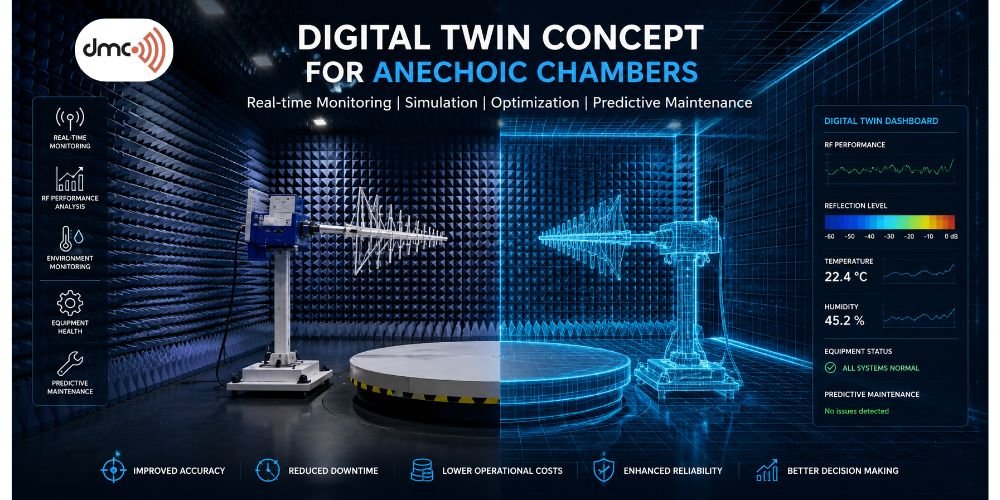
The Digital Twin Concept of Anechoic Chambers is revolutionizing how we think about the future of our RF-testing chambers and advanced electromagnetics testing environments Anechoic Chambers today and how they are going to be overall smarter and more connected through the use of Digital Twin technology as a result of the increasing demand across many industries for accurate wireless communications and automotive radar validation, satellite transmission and testing, and antenna performance assessment.
A digital twin is a digital representation of a physical system. When we apply the digital twin to an echo-free chamber, we create an exact, real-time digital replica of the actual echo-free chamber, including all components of the chamber, such as:
Digital Twin technology will provide a way to simulate, monitor, analyze, and optimize the performance of an echo-free chamber and NOT disrupt any physical test operations.
Integrating Digital Twin Technology into microwave chambers and EMI EMC chambers allows manufacturers and testing laboratories to have a greater degree of operational efficiency, predictive maintenance capability and overall improved Testing Accuracy.
What is a Digital Twin in Anechoic Chambers?
The Digital Twin Concept for an Anechoic Chamber is a software-based representation or model of the physical chamber that collects real-time information via sensors, instrumentation, and RF systems located inside the anechoic chamber continually.
The Digital Twin will track the following:
- RF Signal Performance
- Antenna Placement Accuracy
- Chamber Absorber Condition
- Temperature and Humidity Changes
- Equipment Operational Health
- Repeating and calibrating Tests
Using physical and simulation data allows engineers to identify future issues and improve chamber operations for higher performance.
Many industries, such as OTA testing, wireless test solutions, and advanced Antenna Measurement systems, are turning to this solution to optimize their testing environments.
Importance of Digital Twin Technology in RF Testing Chambers
The highly complex nature of today’s RF test environment can be impacted by small changes in the way the absorber is aligned, the shape of the chamber, or the performance of each piece of test equipment. Traditional methods of performing maintenance usually find issues during the course of their performance degrading.
Digital Twin Technology allows testing facilities to continuously monitor the performance of their chambers and detect performance abnormalities in real-time.
Here are some examples of how Digital Twin Technology benefits testing facilities:
Improved Testing Accuracy
Digital twins allow engineers to correlate simulated behaviour of radio frequency (RF) with physical measurements. This results in better accuracy for antenna measuring and EMC Testing processes.
Predictive Maintenance
With the use of smart monitoring systems, operators are able to recognize defective absorber units, adjustments in machinery and alignment errors prior to impact on the testing process. This diminishes downtime and operator cost of ownership in smart RF chambers.
Quick Optimization of Chamber Designs
Engineers can experiment with modifications made to the actual chambers/areas where they are transmitting waves through wireless methods by virtual testing and thus reducing the development lead time and the perceived risks involved in conducting hardware tests.
Better Functionality of Anechoic Chambers
Digital twin technology can provide engineers with valuable information about where to place the absorbers inside the anechoic chamber, help them control reflections within the chamber, and provide information about how to form the geometry of the anechoic chamber so that the anechoic chamber can obtain maximum RF efficiency level.
Use of Digital Twin Concept in Anechoic Chambers
There are numerous industries utilizing digital twins for accurate electromagnetic testing and they are now starting to utilize digital twins in larger numbers than before.
Automotive Radar Testing
Advanced, anechoic RF chambers are required for precise radar validation of autonomous vehicles. Digital Twins are used to simulate the radar environment of the vehicle, thus increasing repeatability in testing.
Aerospace and Satellite Testing
Highly controlled RF environments are required for satellite communication systems and aerospace antennas. The simulation of RF chambers allows engineers to predict the electromagnetic characteristics of the equipment before physical testing occurs.
5G and Wireless Device Testing
Wireless manufacturers are using Over-the-air, OTA Testing and modern RF Test Chambers as 5G Networks become more prevalent around the world. Digital twins automate the monitoring and calibration of chambers, which improves the efficiency of the RF Testing process.
Defense and Military Applications
Military communication systems need a high level of accuracy and security in their RF Testing environments, and the use of the Digital Twin for Anechoic Chambers ensures these tests maintain the same level of accuracy amongst all military operations.
Key Components of a Digital Twin System
A number of critical technologies are involved in effective implementation of a digital twin for both EMI/EMC chambers and Microwave chambers.
Integration of Sensors
The sensors include monitoring the environment and operation parameters such as temperature, humidity, RF reflections, and equipment vibration.
Live Processing of Data
The digital twin model receives live data from the chambers and updates its virtual model in real-time.
Simulation Software
Advanced software for simulating RF chambers can be used to predict electromagnetic performance and validate chamber configurations.
AI and Machine Learning
AI helps to analyse data for patterns and find things that are out of order. It will also help to make testing processes more efficient by providing automated performance data.
Cloud Connectivity
Cloud-based systems allow for worldwide connectivity between test teams who are working on wireless testing (remote assets).
Advantages of Smart RF Chambers Using Digital Twins
The future of smart RF chambers is going to be heavily reliant on the automation of chambers, and intelligent monitoring systems. Digital twins can provide a number of advantages over the current methods being used in testing YST.
Lower Development Costs
Automated monitoring means that you have less need for manual checks on the equipment and therefore saving on maintenance costs.
Increase Longevity of Chambers
Through predictive maintenance, all of your chamber absorbers, positioning systems, and testing equipment will have continued use instead of wearing out early.
Making the Right Decisions
Engineers can see real time data and will be able to make a quicker choice to complete the test based on their experience with using the chamber and available data.
Increased Customer Satisfaction
The clients who use a sophisticated anechoic chamber with a digital twin have experienced an improvement in the accuracy of testing and reporting of their results.
Challenges with Digital Twin Implementation
Although the digital twin concept for anechoic chambers provides a lot of advantages to the anechoic chamber concept and throughout the entire world, there can be technical challenges involved in implementing this paradigm shift.
High Initial Investment
To develop a truly comprehensive digital twin environment requires advanced sensors, simulator software, and excellent computing resources.
Complex Data Integration
Integrating multiple systems’ real time data from the test chamber will require a strong communication (protocol) along with software compatibility to be able to integrate all of these systems into a single digital twin.
Cybersecurity Concerns
Test systems that are connected through cloud computing must ensure that RF test data remains secure by implementing strong cybersecurity protections.
Skilled Workforce Requirements
A digital twin system requires a team of experienced engineers who are knowledgeable in simulation tools, RF testing, and data analytics.Future of Digital Twin Technology in Anechoic Chambers
Digital Twin Technology has a bright future in RF Testing Chambers. As AI, automation, and IoT technologies become increasingly more sophisticated, the digital twin will become more intelligent and autonomous.
Future of Digital Twin Technology in Anechoic Chambers
Digital Twin Technology has a bright future in RF Testing Chambers. As AI, automation, and IoT technologies become increasingly more sophisticated, the digital twin will become more intelligent and autonomous.
Future developments could include:
- Future developments could include:
- Fully automated chamber calibration
- AI-driven RF optimization
- Remote chamber diagnostics
- Real-time 3D chamber visualisation
- Smart absorber health monitoring
- Advanced predictive analytics
Digital twin systems will be adopted much more widely in industries engaged in EMC testing, antenna measurements, and wireless testing solutions in the years ahead.
The Digital Twin Concept for Anechoic Chambers is changing how modern RF testing environments operate. Using a combination of real-time monitoring, advanced simulation, AI and predictive maintenance, digital twins improve the efficiency, accuracy and reliability of chambers.
The demand for smart and accurate RF testing chambers will continue to drive digital twin technology as a core component to next generation anechoic chambers, EMI EMC Chambers and microwave chambers.
Companies that invest in intelligent chamber technologies today will benefit from improved testing quality, greater operational efficiency and extended long-term performance.
Frequently Asked Questions
It is a virtual replica of an anechoic chamber used for real-time monitoring and simulation.
It improves accuracy, predictive maintenance, and chamber performance analysis.
They are used in automotive, aerospace, defense, and wireless communication testing.
They reduce downtime, improve testing reliability, and optimize chamber efficiency.
It helps detect issues early and prevents unexpected testing interruptions.