
Table of Contents
- What Is Modular Anechoic Chamber Construction?
- Advantages of Modular RF Chambers
- Common Components of Modular Anechoic Chambers
- Future of Modular Anechoic Chamber Design
There is today an increasing need in various industrial sectors for RF testing chambers in applications such as wireless communications, radar tests, antenna tests, and compliance EMC testing. The acquisition of modular anechoic chamber construction for RF testing has therefore gained popularity among firms seeking RF testing chambers that offer good shielding efficiency.
Due to the rising needs for RF testing in various industries, including automotive, aerospace, defense, telecommunications, and electronics sectors, there will certainly be a higher need for modular anechoic chambers than traditional chambers that are usually expensive.
What Is Modular Anechoic Chamber Construction?
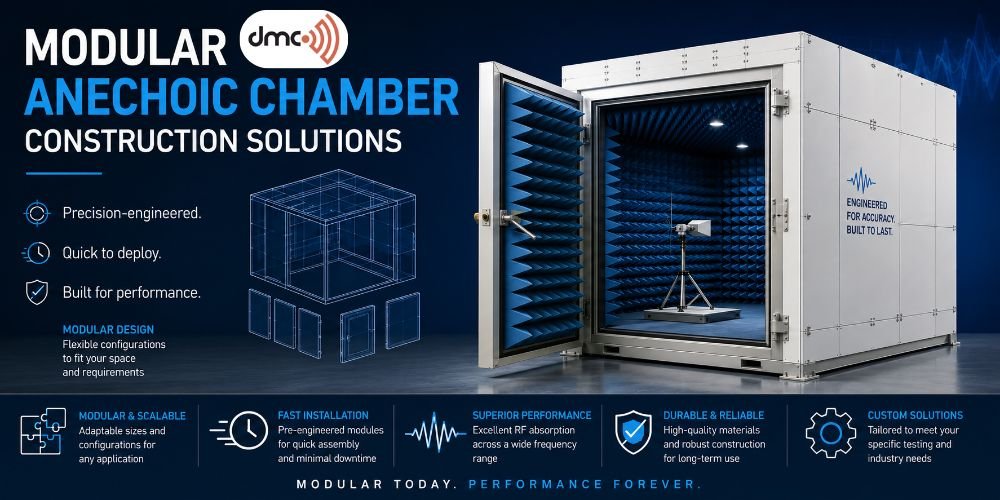
Modular anechoic chamber construction involves constructing an RF test chamber using prefabricated shielded walls, absorber materials, RF doors, and ventilation systems. These testing chambers are designed to reduce echoes and block any forms of external interference.
In the modern day, Anechoic Chamber design centers on improving flexibility within the chamber without compromising good electromagnetic isolation and absorber efficiency. It is preferred that the chambers be modular because of their ability to be reconfigured as required by the test needs.
The use of modular designs is particularly beneficial to firms engaged in:
- Wireless communication testing
- EMC testing
- Radar testing
- Antenna measurements
- Aerospace RF testing
- Automotive radar testing
- Defense communication systems
Advantages of Modular RF Chambers
Quick Deployment:
An obvious benefit of using Modular Anechoic Chamber design is quick installation. As opposed to conventional Anechoic chambers, shielding materials used in modular design can greatly improve construction time.
Organizations requiring rapid setup of EMC testing chamber facilities will enjoy the advantage of shorter delays in operations and timely project completion.
Flexible Expandability:
With any shift in testing requirements, a modular chamber system will be able to accommodate these changes through expansion and modification. The shielding panels, absorbers, and test chamber can all be easily modified without having to take down the entire structure of the chamber.
The adaptability of a modular system will allow it to become an ideal choice for customized RF chambers used in scientific laboratories and testing companies.
Effective Shielding Capacity:
Modern shielded chamber systems are made up of well-engineered conductive panels, which provide excellent protection against electromagnetic interference. Effective shielding will ensure that tests will be done correctly and that international EMC standards will be adhered to.
High-quality shielded enclosure systems are required for proper low-noise RF testing conditions.
Affordable Chamber Construction:
The modular chamber construction helps keep labor costs down while making minimal infrastructural modifications. Companies will not have to pay huge expenses for fixed chamber systems.
Common Components of Modular Anechoic Chambers
Modular Panel Shield
Steel panel shield systems form the basic framework of the chamber. These shields provide excellent attenuation characteristics and electromagnetic shielding capabilities.
Advanced EMI shielding rooms employ precise shielding panel joining techniques to prevent RF losses and maintain the shielding effectivity.
Microwave Absorption Systems:
Internal absorber materials are very important in controlling electromagnetic reflection within the chamber. Examples of Microwave absorber systems are:
- Ferrite Tile Absorbers
- RF Hybrid Absorbers
- Pyramidal Foam Absorbers
- Broadband Absorber Materials
The choice of absorber materials will depend on the required frequency range of the test.
RF Shielded Doors. RF Doors allow easy entry into the chamber while maintaining the integrity of the chamber during the testing process.
Filtered Power and Ventilation Systems
Filtered power and ventilation systems will ensure that electromagnetic interference does not enter the chamber via cables or air flow systems.
Applications of Modular Anechoic Chambers:
EMC Compliance Testing
An EMC testing chamber is essential for validating whether electronic products comply with international electromagnetic compatibility regulations. The manufacturer uses the chambers to detect unwanted emissions and enhance their products’ quality and reliability.
Antenna Testing Chamber:
State-of-the-art Antenna testing chamber allows for conducting tests in a non-reflection space regarding antenna gain, radiation, polarity, and signal efficiency.
Wireless communication corporations are very dependent on state-of-the-art antenna measurement technology in terms of their 5G and satellite communication systems.
Radar Testing Chamber:
RF chamber is essential for automotive, defense radar technologies, and aerospace applications. Such chamber enables engineers to test radar precision and sensors.
Wireless Testing Chamber:
Wireless testing chamber is required for wireless certification including Wi-Fi, Bluetooth, IoT and mobile devices testing. It guarantees consistent RF testing procedure.
Aerospace and Defense RF Testing
Military, defense industry, and aircraft manufacturers need secure RF chambers for communication system analysis and electronic warfare testing.
Relevance of Correct Anechoic Chamber Design
An effective Anechoic chamber design plays a key role in test accuracy, quiet zone performance, and overall chamber performance. Relevant aspects in chamber design are:
- Frequency range specifications
- Chamber size specifications
- Quiet Zone optimization
- Absorber layout configurations
- Shielding effectiveness
- Chamber equipment positioning systems
Anechoic chamber design by professional EMC chamber manufacturers follows customer needs and applicable standards.
Future of Modular Anechoic Chamber Design
Future prospects in Modular Anechoic Chamber construction are directly related to the development of wireless communication and smart testing technology trends. There is an emerging need for more flexible and intelligent RF testing environments.
Some of the future trends may be:
- AI RF chamber design
- Radiofrequency measuring system automation
- High absorption materials
- Green shielding materials
- Portable chambers
- Environmental control system intelligence
There is an exponential growth in IoT devices, satellites, self-driving vehicles, and communication systems.
Advanced RF Test Solutions for Contemporary Industries
Contemporary industries require effective EMI EMC test solutions which can give accurate results. Modular chamber technology makes it easy to integrate test equipment into the system while maintaining the durability of the solution.
Some of the benefits that companies which want Custom RF Chambers can benefit from when using modular chamber technology are:
- Long lasting
- Simplified upgrading process in the future
- Gives maximum shielding
- Accurate antenna testing
- Low maintenance costs
- Flexible chamber design
Due to the increased compliance requirements globally, contemporary industries continue to invest in advanced EMI Shielding Rooms, Wireless test chambers, and RF Shielded Enclosures Systems.
Frequently Asked Questions
It is a chamber building method using modular RF shielded panels and absorber systems.
RF chambers are used for EMC, antenna, radar, and wireless communication testing.
Microwave absorber systems reduce electromagnetic reflections inside the chamber.
Yes, modular chamber systems can be upgraded or expanded easily.
Automotive, aerospace, defense, electronics, and telecom industries use EMC testing chamber solutions.