
Table of Contents
- What Are EMC Power Filters
- What Is the Importance of EMC Power Filters for Shielded Rooms
- How to Choose an EMC Power Filter
EMI might affect electronic equipment and measurement devices and even the effectiveness of electromagnetic compatibility tests. Shielded rooms aim at restricting electromagnetic radiation from either coming into or exiting an enclosure. But this alone does not solve the problem if the electric cables go through the enclosure.
This is why EMC power filters for shielded rooms come into play. They assist in reducing high-frequency electrical noises that are conducted through the power lines while supplying the needed electricity to the devices. Diamond Microwave Chambers Ltd recognises the importance of considering power-line filtering as part of an overall shielding and EMC design.
What Are EMC Power Filters?
EMC Power Filters are electronic devices that are used to suppress electromagnetic noises in the AC and DC power lines. The nature of these filters depends upon their construction and uses inductors and capacitors to suppress any interference in particular frequency bands.
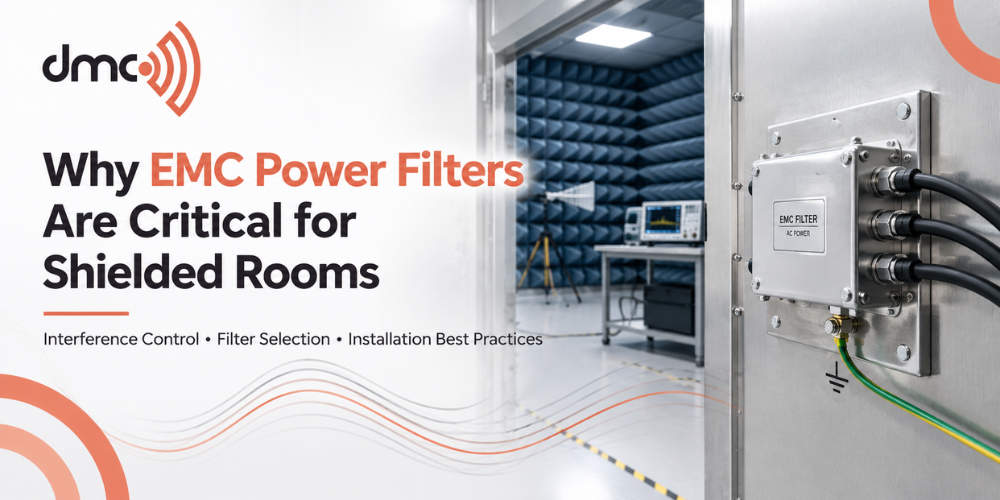
The power filters are usually mounted on the border where the services come into the shielded room. This will help to sustain the effectiveness of the shielding room as well as supply power for testing purposes.
Functionality includes the following:
- Conducted interference reduction: This helps prevent electrical noise traveling through power cables.
- Shield integrity: Proper installation of filters allows us to prevent our power connections from becoming unwanted pathways for EMI.
- Testing and measurement control: Conducted noise reduction helps provide better conditions for testing.
- Electrical power source maintenance: Selection of correct filters ensures operation of our device within the voltage and current ratings of the filters.
What Is the Importance of EMC Power Filters for Shielded Rooms?
1. Decreasing Electromagnetic Interference
Noise can be induced into the power line from outside equipment like switching power supply units and others. In absence of a proper filter, this noise will get inside a shielded room via electrical connection.
Selection of the right type of EMC power filter helps to attenuate the interference within its working frequency range.
2. Shielding Effectiveness Protection
The effectiveness of the shielding room will depend on the functioning of the conductive shell, doors, seams, service penetration, and electrical connections. Any poorly conceived penetration may negatively impact the efficiency of shielding.
The power line filters that are put in place at the boundary of the room deal with the problem of interference conducted via the power lines.
3. Ensuring EMC Testing Precision
EMC labs make use of specially controlled spaces in which emissions and immunity properties of electronic devices are studied. Electrical noise may become a factor in causing measurement imprecision and test interference depending on the testing system used.
Appropriate filtering may be employed as one way to limit the possibility of interference. Nonetheless, there is more needed to produce accurate testing results.
4. Supporting Sensitive Electronic Equipment
Shielded rooms may contain spectrum analysers, receivers, measurement instruments, communication devices, and equipment under test. These systems can have different electrical and electromagnetic requirements.
The filter should be selected according to the equipment’s supply needs and the interference frequencies that must be controlled. A filter is not a substitute for appropriate equipment protection, surge protection, or a properly designed electrical installation.
Types of EMC Power Filters Used in Shielded Rooms:
Different applications require different filtering arrangements.
| Filter type | Typical application | Important consideration |
|---|---|---|
| Single-phase power filter | Lower-power AC equipment | Rated voltage, current, and attenuation |
| Three-phase power filter | Three-phase electrical supplies | Phase configuration and load requirements |
| DC power filter | DC-powered instruments and systems | DC voltage, current, and noise spectrum |
| Feedthrough power filter | Power entering through a shielded wall | Conductive mounting and shielding continuity |
This will depend on the configuration of the room, the linked apparatus, the required frequency range, and the power installation.
How to Choose an EMC Power Filter:
Filter selection cannot be based solely on the specifications of a particular product. The engineers need to consider the requirements before installation.
The following points need to be considered:
- Voltage and current specifications: Ensure that the filter fits the required voltage and current levels.
- Frequency range: Check out the insertion loss data of the filters for various frequencies.
- Installation process: Ensure that the filter is suitable for use with the shielded walls, panels, and bonding system.
- Safety: Ensure that you check the electrical rating from safety point of view, maximum temperature and leakage current requirement.
- Compatibility considerations: Consider starting currents and loading effects and the effect on the connected equipment.
- Verification: Test the installed filter to check whether it will fulfill the EMC requirements of the system.
The Insertion loss data provided for the filter will not guarantee the effectiveness of the installation of the shielded room because of problems associated with installation and unintentional coupling via cables.
Installation Requirements:
Proper installation is very important in ensuring the required filtering effect. Even a good filter can fail to perform optimally if the installation permits any form of interference to pass through.
Recommended practices include:
- Install the filter at the designated shield boundary where practical.
- Maintain appropriate low-impedance conductive bonding between the filter housing and the shielding structure.
- Separate filtered and unfiltered wiring to minimise unwanted coupling.
- Take into consideration the wiring diagrams, torque figures, and safety measures according to the manufacturer’s recommendations.
- Make sure that testing and validation are scheduled after installation and modifications.
Installation is to be performed only by qualified electrical and EMC specialists, especially when high currents and voltages are used.
Pro Tip:
Make a plan of power filtering before shielded room construction. Identify all electrical load requirements, power source requirements, frequency of noise, and future requirements before filter selection.Planning filter installation along with the shielding of the chamber will prevent costly future modifications.
EMC power filters are an important part of many shielded-room installations because they help control conducted electromagnetic interference entering or leaving through power connections. Their effectiveness depends on correct selection, electrical compatibility, installation quality, and verification of the complete shielding system.
Diamond Microwave Chambers Ltd provides a point of contact for organisations exploring shielded-room and EMC chamber requirements. An analysis of the filtering of the power supply together with the enclosure design will be useful to laboratories in making appropriate arrangements.
Frequently Asked Questions
They reduce unwanted electromagnetic noise conducted through power lines while allowing electrical power to reach equipment inside the shielded room.
They can help reduce conducted interference that may disturb sensitive instruments or contribute to measurement uncertainty during EMC testing.
They are commonly installed at the shielded-room boundary where power lines enter the enclosure. The final location should follow the chamber design and filter manufacturer’s installation requirements.
Consider the supply voltage, current, AC or DC configuration, required frequency range, insertion-loss characteristics, installation method, and applicable safety requirements.
No. Filters address conducted interference within their operating range, but overall performance also depends on shielding continuity, doors, cable penetrations, grounding and bonding, and other potential interference paths.