
Table of Contents
- What is EMC and Its Importance in EVs
- Ensuring Safety and System Reliability
- Role of EMC Chambers in Testing
- Supporting Future EV Technologies
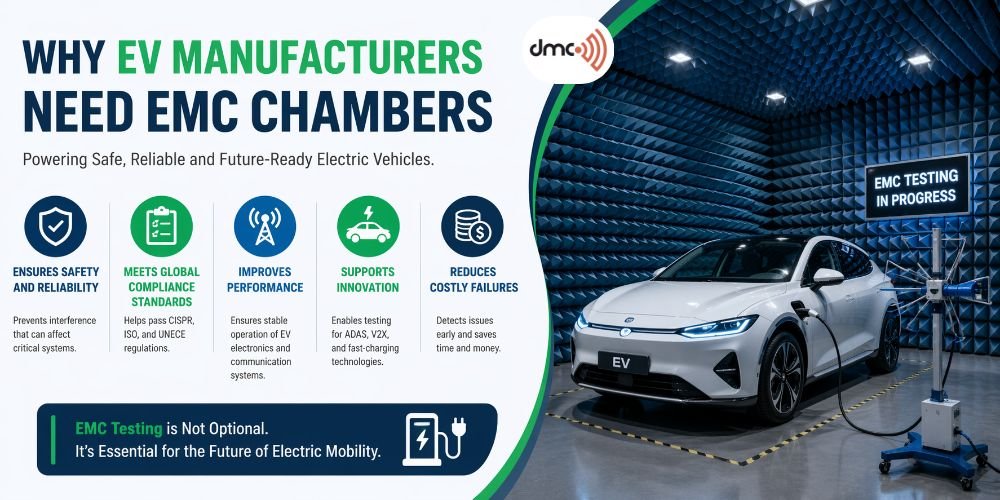
The automobile sector has undergone a transformation due to the explosive growth of electric cars (EVs).With advanced electronics, battery systems, and high-voltage components, EVs are more complex than traditional vehicles. This is exactly Why EV Manufacturers Need EMC Chambers to ensure performance, safety, and regulatory compliance.
The rapid growth of electric vehicles (EVs) has significantly increased the use of complex electronic systems. From battery management to advanced connectivity, modern EVs rely heavily on electronics. This is why EMC chambers play a critical role in ensuring smooth and interference-free operation.
As the automotive industry evolves, manufacturers must adopt reliable EMC testing solutions to maintain safety, performance, and compliance.
What is EMC and Its Importance in EVs
Electromagnetic Compatibility (EMC) refers to the ability of electrical systems to function properly without causing or being affected by electromagnetic interference.
In EVs, multiple electronic subsystems operate simultaneously. Maintaining electromagnetic compatibility in EVs ensures that these systems do not interfere with each other. Without proper testing, even minor interference can lead to performance issues.
Growing Electronic Complexity in EVs
Electric vehicles are equipped with:
- Battery management systems
- Electric drivetrains
- ADAS technologies
- Infotainment and connectivity modules
Each of these components generates electromagnetic signals. Proper EMC chambers for EV testing help identify and eliminate interference during the development phase.
Ensuring Safety and System Reliability
Safety is a major concern in EV design. Electromagnetic interference can disrupt critical vehicle systems such as braking or steering.
By using automotive EMC chambers, manufacturers can:
- Detect unwanted emissions
- Improve system immunity
- Validate electronic stability
This ensures reliable operation under real-world conditions.
Meeting Regulatory Standards
Global automotive markets require strict compliance with EMC regulations. Manufacturers must follow standards such as CISPR, ISO, and UNECE.
Through accurate EV compliance testing, companies can meet certification requirements and avoid costly delays in product launches.
Role of EMC Chambers in Testing
EMC chambers provide a controlled environment free from external interference. These RF shielding chambers for EVs are essential for conducting:
- Radiated emission tests
- Conducted emission tests
- Immunity testing
Such testing ensures that all electronic components perform as intended before mass production.
Enhancing Vehicle Performance
Stable electronic systems are key to overall vehicle performance. With proper EV EMC testing solutions, manufacturers can ensure:
- Consistent sensor operation
- Reliable communication systems
- Accurate control unit performance
This leads to better driving experience and system efficiency.
Supporting Future EV Technologies
Emerging technologies such as autonomous driving and V2X communication demand precise electromagnetic control.
Advanced EMC chambers for EV testing allow manufacturers to validate these innovations in a controlled environment, reducing risks before deployment.
Cost Reduction and Risk Management
Skipping proper EMC testing can result in:
- Product recalls
- Increased warranty costs
- Brand reputation damage
Using automotive EMC chambers helps identify issues early, reducing overall development costs and improving product quality.
As electric vehicles continue to evolve, EMC testing becomes increasingly important. It ensures that all electronic systems operate efficiently, safely, and in compliance with global standards.
Investing in advanced EMC testing environments is essential for manufacturers aiming to deliver high-quality and future-ready electric vehicles.
Frequently Asked Questions
It evaluates vehicle noise, vibration, and harshness levels.
It is used for electromagnetic, radar, and antenna testing.
It prevents interference between electronic systems.
They are RF chambers used to test ADAS radar systems.
A controlled setup for validating driver assistance technologies.