
Table of Contents
- Why Compact Anechoic Chambers Are Gaining Popularity
- Key Features of Compact and Low-Cost Anechoic Chambers
- Cost Benefits of Compact Anechoic Chambers
- Future Trends in Compact Anechoic Chamber Technology
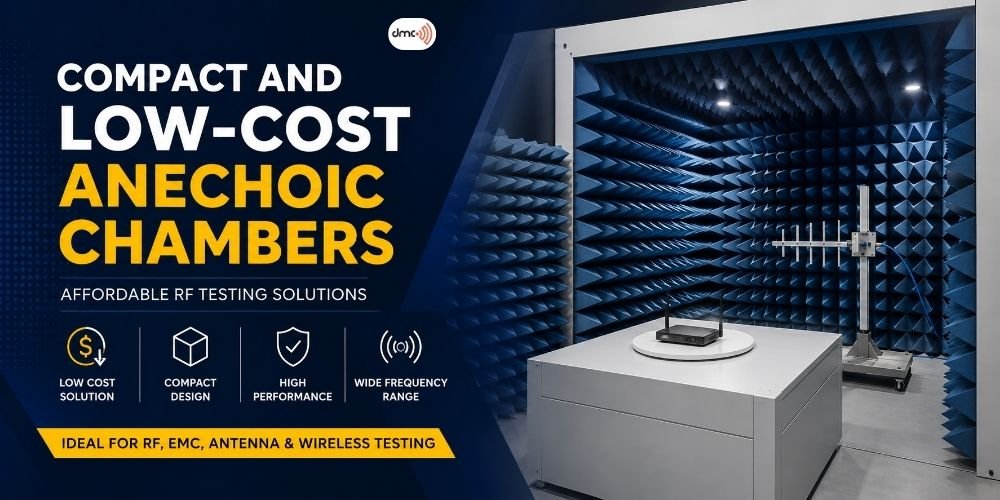
The rise of wireless technology has led to a huge increase in demand for reliable low-cost methods to test wireless technologies. Companies creating products like wireless sensors, IoT devices, antennas, automotive electronics, communication systems, etc., need accurate radio frequency (RF) testing capability and are seeking to do so without breaking their budgets. Compact and Low Cost Anechoic Chambers provide a solution for this need.
Most traditional anechoic chambers are large, extremely costly, and often take up an excessive amount of space in the facilities they are located in. While they provide excellent isolation from other electromagnetic signals & accurate results during testing, many organizations – including research institutions, universities, start-up companies, and product development firms – will benefit from an alternative that is more affordable. Compact and Low Cost Anechoic Chambers fill that void by allowing for consistent and reliable testing performance in a much smaller amount of space while also providing a much lower overall capital investment.
These chambers were specially engineered to support measurements such as RF measurements, antenna characterization, wireless device verification/validation, and EMC pre-compliance testing. Their compact size is perfect for laboratories with limited square footage while still providing the highest levels of shielding performance and absorption capabilities.
Why Compact Anechoic Chambers Are Gaining Popularity
The growth of wireless communication technology has accelerated the demand for quick-to-install, easy-to-use testing environments. There is a growing need for faster deployment of test equipment, as well as for flexibility in terms of testing capabilities. For these reasons, many companies are now creating compact and low-cost anechoic chambers.
Compact and low-cost anechoic chambers have many advantages:
- Reduced facility requirements
- Reduced installation costs
- Faster deployment
- Easier maintenance
- Cost-effective RF testing capability
- Flexible customization capabilities
Because of these advantages, compact and low-cost anechoic chambers are being utilized by organizations to help meet the budget constraints of operating a high-quality measurement laboratory (or testing facility).
Key Features of Compact and Low-Cost Anechoic Chambers
Modern Compact RF Chambers incorporate advanced absorber technologies and shielding materials that deliver excellent performance while reducing overall system costs.
| Feature | Benefit |
|---|---|
| Compact Footprint | Fits into smaller laboratories and R&D facilities |
| High-Performance RF Absorbers | Minimizes signal reflections |
| Shielded Construction | Reduces external electromagnetic interference |
| Modular Design | Allows future expansion and customization |
| Cost-Efficient Manufacturing | Lowers total ownership costs |
| Quick Installation | Reduces project timelines |
| Multi-Frequency Support | Enables testing across various wireless technologies |
| Flexible Test Setups | Supports different device configurations |
The combination of these features enables organizations to conduct accurate testing while maximizing laboratory space utilization.
Applications of Compact and Low-Cost Anechoic Chambers
The vast range of Compact, Low-Cost Anechoic Chambers allows for their use in several different testing applications and in many different industries.
Wireless Device Testing
Compact, low-cost anechoic testing chambers are very valuable to wireless device manufacturers of both WiFi, Bluetooth, Zigbee, LTE, 5G and IoT products. Manufacturers use these controlled RF environments for device performance evaluation. Compact chambers provide a controlled environment for the measurement of signal quality, transmission performance, and receiver sensitivity.
Antenna Testing
Accurate antenna measurements require a reflection-free environment. An antenna testing chamber allows engineers and designers to measure and evaluate both radiation patterns and gain, efficiency and polarization characteristics.
EMC Pre-Compliance Testing
Many companies conduct EMI EMC testing prior to sending their products to certified testing laboratories. Compact man-made anechoic chambers allow designers to identify potential compliance issues very early in the design process, reducing certification costs and project delays.
Research & Development
Universities, innovation centers and technology start-ups are using compact, RF testing chambers for various research activities; this will enhance their ability to validate prototypes, conduct experiments, and support research activities associated with wireless communication and electromagnetic systems.
Automotive Electronics Testing
Automotive electronic systems and modules are becoming more integrated into modern vehicles, to provide better operation of electronic systems and modules installed in vehicles. Compact chambers are used for testing automotive electronics, such as radar components and communications technology.
Cost Benefits of Compact Anechoic Chambers
Low-cost anechoic chambers are one of the most popular choices for organizations that want to save money on their overall cost of anechoic chamber systems. Because of their reduced overall cost, low-cost anechoic chambers provide an excellent alternative to traditional anechoic chambers:
- Dedicated buildings
- Major construction efforts
- Large volumes of absorbers
- Complex HVAC systems
- Operational costs
Low-cost and compact anechoic chambers can not only help save money but also provide the same testing accuracy and reliability as traditional chambers.
The smaller size of the low-cost anechoic chamber allows for less expensive infrastructure-related costs, and using modular construction methods allows for a more efficient use of resources for testing, as well as easier installation and maintenance. As a result, companies are able to use their resources more effectively to support the development of products and increased innovation.
Performance Considerations
Compact chambers differ in size from traditional facilities; however, designs of today’s compact and low-cost Chamber options allow for many testing applications to be conducted with high-quality results.
Key Performance Indicators to consider for these types of chambers are:
- Effectiveness of Shielding
- Absorber Performance
- Size of Quiet Zone
- Coverage by Frequency Range
- Repeatability of Measurements
- Environmental Stability
Choosing the correct configuration of a chamber will depend on your testing goals, sizes of devices to be tested and, finally, what frequency you want to test your device.
Organizations that purchase chambers should partner with an experienced chamber manufacturer to make sure that their choice meets both their technical and operational needs.
Pro Tip
If you are considering the purchase of Compact and Low-Cost Anechoic Chambers, it is best to select a modular design which will allow for future upgrades. This will help to provide an all-in-one solution that evolves as your testing requirements do and reduces the need to replace your entire chamber later, thus maximizing the long-term return on your investment.
Selecting the Right Compact RF Chamber
Selecting a suitable testing chamber requires careful consideration of many different criteria.
Testing Specifications
Determine what types of measurements will be taken, such as antenna testing, EMC evaluation, OTA measurement, etc. in addition to validating the wireless devices with your business needs.
Frequency Range
Be sure that the chamber is able to accommodate the operating frequencies of your products and applications.
Chamber Size
The chamber needs to allow enough space for equipment, antennas, and test fixtures while still providing an adequate quiet zone for the measurement; therefore, this must be considered when determining the size of the chamber needed.
Financial Considerations
When evaluating the available options, consider to what extent you’ll commit on both initial investment and ongoing operational costs.
Customization Potential
Many manufacturers of RF Chambers will offer “custom” solutions designed to meet specific testing requirements, as a way of enabling organizations to optimize performance and minimize costs.
Future Trends in Compact Anechoic Chamber Technology
Because wireless connectivity is increasingly in demand due to new technology developments (e.g., 5/6G networks like 5G), Internet of Things devices (IoT), autonomous vehicles and new smart manufacturing techniques, future compact low-cost Anechoic Chamber facilities will be based on several technological advancements, including:
- Use of newer hybrid absorbers
- Advanced modular construction techniques
- Expanded automation features
- Integrated measurement systems
- Expand support for millimeter operation
- Support for AI-assisted test workflow
To increase overall test efficiency while still being affordable and flexible for your testing needs.
Anechoic Chambers that are compact and low-cost are changing the way that businesses conduct their RF and EMC tests. With a combination of affordability, flexibility and consistency in performance, these chambers can provide an alternative means to the traditional large scale facilities.
Regardless of what type of device you have, the Anechoic Chambers are designed for helping customers with validating wireless devices, taking antenna measurements, completing EMC pre-compliance testing or conducting research. With the continued influx of new wireless technologies, using compact chambers in product development is an important investment towards reducing your operational costs by streamlining your product development process.
Frequently Asked Questions
They are smaller, budget-friendly RF testing environments designed to minimize electromagnetic reflections and interference during testing.
They are commonly used for antenna testing, wireless device validation, EMC pre-compliance testing, IoT product development, and research projects.
Yes. Modern compact chambers can be designed to support frequencies used in Wi-Fi, Bluetooth, IoT, LTE, 5G, and emerging wireless technologies.
Yes. When properly designed, they provide highly reliable and repeatable measurement environments suitable for many RF and EMC applications.
They require less space, lower installation expenses, reduced maintenance, and smaller absorber inventories compared to traditional full-size chambers.