
Table of Contents
- What Are CISPR 25 Chambers?
- Key Features of CISPR 25 Chambers
- Benefits of Using CISPR 25 Chambers
- Applications Across Automotive Industries
The auto industry is experiencing technological innovations like never before, where the use of electric cars, autonomous driving technology, infotainment systems, wireless technologies, and driver assistance systems are now becoming commonplace. With the increase in electronic content in cars, EMC is fast becoming a necessity. CISPR 25 is the internationally accepted standard that details the method of measuring the radio disturbance characteristics of components installed in automobiles.
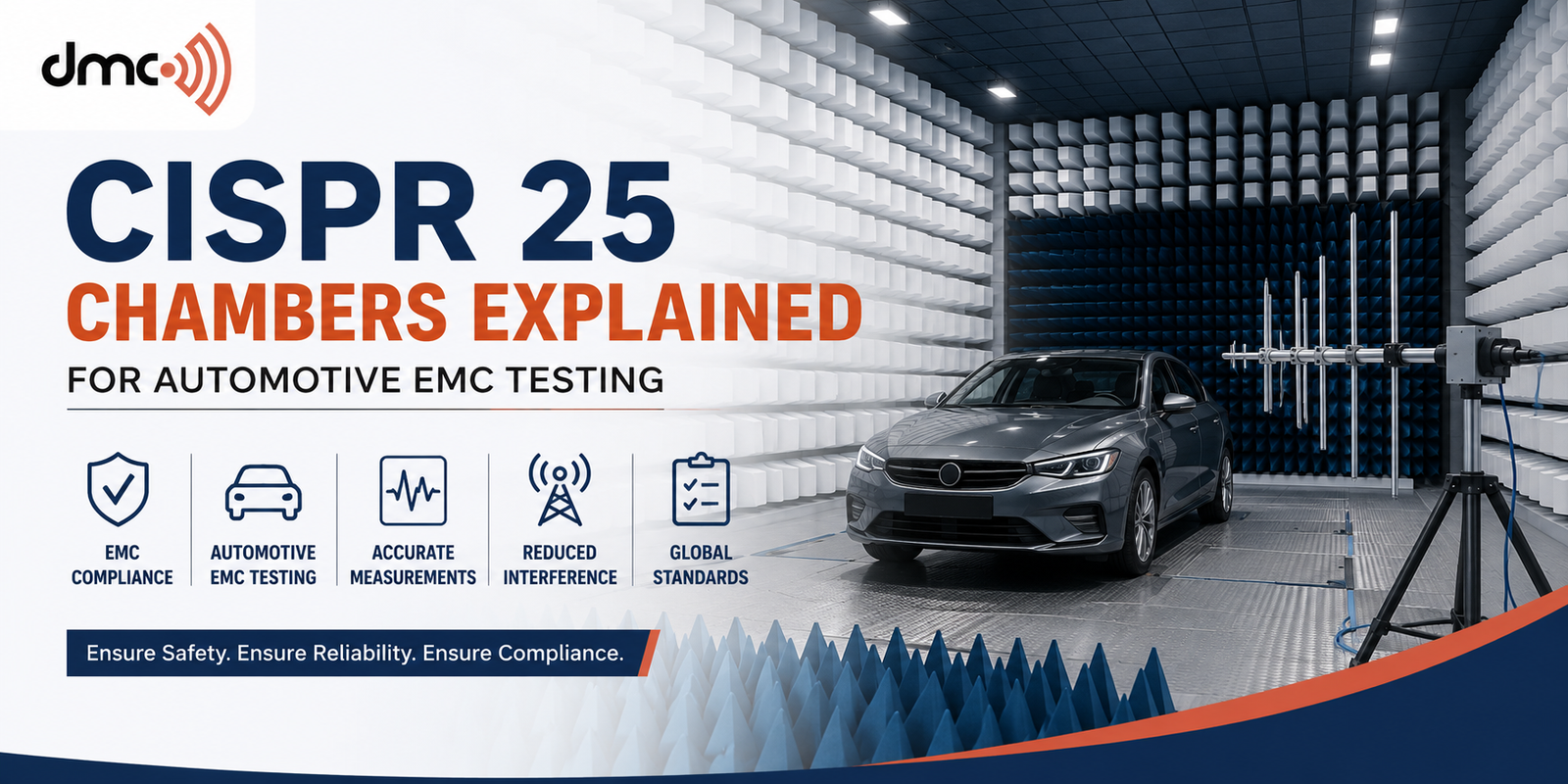
The CISPR 25 Chambers are employed by manufacturers to create an artificial electromagnetic environment where the automotive EMC Testing can take place without any disturbance from outside.
From electric automobiles to connected cars, from radar systems to infotainment modules, manufacturers use high-end testing facilities for each component before it hits the markets.
What Are CISPR 25 Chambers?
CISPR 25 Chambers are specialized EMC testing facilities that have been specially developed for the testing of automotive electronic devices as per the CISPR 25 specifications. These chambers generate an electromagnetic environment that does not produce any reflections, has no external RF interference, and offers high repeatability of measurements.
The key aim of such tests is to measure the electromagnetic emissions of automotive electronic devices so that there is no interference with radios, GPS receivers, Bluetooth, vehicle sensors, or critical electronics on board.
Modern Automotive EMC Testing Labs utilize these chambers for various purposes.
Why Automotive EMC Testing Matters
Modern vehicles have many electronic control units that communicate constantly with each other. In any case, if any electronic emissions happen, then it could cause the performance of the car to malfunction.
EMC Testing for Automotive helps the manufacturer:
- To avoid interfering with the car’s electronics
- Increase system reliability
- Increase passenger safety
- Compliance with international regulations on EMC
- Reduced cost of redesigning products
- Product certification is accelerated
Without EMC Testing, the electronic component might not meet the regulations and cause unexpected interference inside the vehicle.
Key Features of CISPR 25 Chambers
A professionally designed CISPR 25 Chamber incorporates several important features that ensure accurate EMC measurements.
| Feature | Benefit |
|---|---|
| RF Shielding | Blocks External Electromagnetic Interference |
| RF Absorbers | Minimize Signal Reflections Inside the Chamber |
| Ground Plane | Provides Standardized Testing Conditions |
| Turntable Integration | Supports Testing from Multiple Orientations |
| Measurement Antennas | Capture Emissions Accurately |
| Filtered Power Lines | Prevent Unwanted Conducted Noise |
| Automated Test Systems | Improve Repeatability and Efficiency |
| Compliance Layout | Meets CISPR 25 Testing Requirements |
These design elements ensure high measurement accuracy across different automotive applications.
CISPR 25 Standard Overview
The CISPR 25 standard is concerned with the measurement of radio disturbance emissions from the automotive components fitted inside a vehicle.
These include:
- Test environment
- Antenna placement
- Frequency bands
- Measurement procedures
- Equipment specifications
- Emission limits
This standard is applied across the globe when testing electromagnetic compatibility in vehicles.
Components Commonly Tested
Several components associated with automotive electronics need to be tested within CISPR 25 Chambers. These include:
- Engine Control Units (ECUs)
- Battery Management Systems
- Electric Vehicle Chargers
- Automotive Radar Modules
- Cameras
- Infotainment Systems
- GPS Modules
- Bluetooth Devices
- Wireless Charging Systems
- ADAS Controllers
- LED Lighting Controllers
- DC-DC Converters
- Electric Motors
- Power Electronics
Importance of RF Shielding
Radio Frequency Interference can play a big role in EMC testing. Good RF Shielding prevents outside radio frequency interference from affecting the results of tests. An RF Shielded Chamber will ensure that:
- Measurements are consistent
- Results can be replicated
- There is low ambient noise
- Efficient lab work is done
Automotive EMC Testing requires such an environment.
Benefits of Using CISPR 25 Chambers
Companies that install CISPR 25 Chambers enjoy various benefits of operation.
- EMC Measurements Accuracy
Controlled electromagnetic environment facilitates more accurate measurements.
- Faster Development Process
EMC problems can be detected early in the product development phase.
- Compliance on the Global Market
Testing based on international standards makes the global market approval easier.
- Better Product Quality
Unwanted emissions can be detected before mass manufacturing.
- Increased Customer Trust
Compliant electronic components ensure better performance of vehicles and good brand reputation.
- Cost Effective Development
Detection of EMC problems during tests is much cheaper compared to fixing problems after production.
Applications Across Automotive Industries
Modern Automotive EMC Testing caters to various industries.
- Electric Vehicles
EMC testing is critical for batteries, power conversion devices, and charging systems.
- Autonomous Vehicles
Radar detectors, LiDARs, cameras, and communication systems need electromagnetic compatibility.
- Commercial Vehicles
Heavy commercial vehicles need to test many electronic controls for EMC.
- Connected Vehicles
Wireless communication modules need rigorous testing to avoid any form of interference.
- Automotive Suppliers
Automotive parts suppliers use CISPR 25 Chambers in the qualification process.
Selection of CISPR 25 Chambers
There are various criteria which you must consider when selecting a chamber.
Consider:
- Chamber size
- Frequency range
- Effective shielding
- Performance of absorbers
- CISPR 25 compliance
- Automation capabilities
- Future capacity
- Installation services
- Calibration services
- Maintenance services
An appropriately designed chamber can meet the needs of Automotive EMC Testing in the present and future.
Pro Tip
Select a CISPR 25 Chamber that is modular and easy to automate. Modular chamber design will ensure easy upgrade options, reduced downtime and rapid adaptation of labs to any change in the automotive EMC standard.
FUTURE TRENDS IN AUTOMOTIVE EMC TESTING
Electronics used in vehicles are constantly developing. Future CISPR 25 Chambers will be designed to cater for:
- Electric vehicle architecture
- High voltage electronics
- 5G vehicle communication
- V2X (vehicle to everything)
- Autonomous vehicle sensors
- AI-enabled EMC analysis
- Automated tests
- Remote lab monitoring
- Digital reports
- Advanced measurement software
All these developments will not only enhance testing efficiency but also ensure compliance with constantly evolving global EMC standards.
With the advancement of electronics used in automobiles, maintaining electromagnetic compatibility has never been as important as today. CISPR 25 Chambers provide the environment needed for effective Automotive EMC Testing.
Compliance with CISPR 25 helps in ensuring product reliability, improving safety for passengers, lowering costs involved in development and gaining quick regulatory approval. In electric and autonomous driving cars, these dedicated EMC chambers continue to be an essential part of automotive product development.
Companies that invest in quality EMC testing facilities pave the way for their success in the connected automotive world of the future.
Frequently Asked Questions
A CISPR 25 chamber is a specialized EMC testing environment designed to measure electromagnetic emissions from automotive electronic components according to the CISPR 25 standard.
It ensures vehicle electronic components do not generate excessive electromagnetic interference, supporting safety, compliance, and reliable performance.
Common products include ECUs, battery management systems, radar modules, infotainment systems, wireless communication devices, cameras, and electric vehicle electronics.
RF shielding blocks external electromagnetic signals, creating a controlled environment for precise, repeatable, and standards-compliant measurements.
Yes. They are widely used for testing EV power electronics, charging systems, battery controllers, inverters, and other high-voltage automotive components.