
Table of Contents
- What Is An EMC Standard?
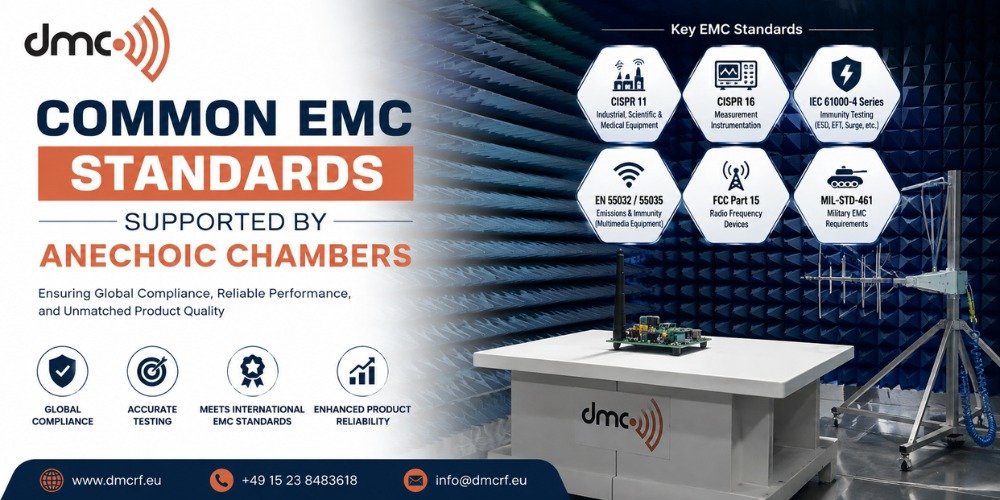
- Common EMC Standards Backed Up by Anechoic Chambers:
- EMC Chamber Features That Support Standards:
Anechoic chambers are special enclosures that prevent any reflections and provide no electromagnetic interference from outside during the RF and EMC tests. Choosing the anechoic chamber according to the particular standard is vital for obtaining accurate results.
What Is An EMC Standard?
An EMC standard determines the interaction between the electronic device and electromagnetic energy and defines the level of electromagnetic interference produced by it.
An anechoic chamber is very important for measuring radiated EMC since it creates a controlled RF environment. According to CISPR 16-1-4, there are some specifications concerning the antennas and test sites used in radiated disturbance measurements. The latest edition of the standard is CISPR 16-1-4:2025, thus the laboratories have to check what edition they need according to the target market and certification program.
Common EMC Standards Backed Up by Anechoic Chambers:
1. CISPR 16-1-4 – Radiated Emission Test Sites
CISPR 16-1-4 is a fundamental reference for radiated disturbance measurement sites. It covers antenna and test-site characteristics and supports controlled measurements of radiated emissions. It is relevant when designing a semi-anechoic chamber, full anechoic chamber, or other controlled test site for EMC measurements.
A properly designed chamber helps control reflections, background noise, antenna positioning, equipment placement, and the relationship between the equipment under test and the measurement antenna.
2. CISPR 32 – Electromagnetic Emissions from Multimedia Equipment
CISPR 32 covers electromagnetic emissions from multimedia equipment, which include information technology and multimedia equipment. This standard also specifies radiated emission tests and defines two classes of equipment, which are class A and class B.
In order to perform CISPR 32 testing, an EMC chamber needs to have the proper absorber characteristics, the right configuration of a ground plane, if any, calibrated antennas, proper cable routing and low RF background.
3. CISPR 35 – Immunity of Multimedia Equipment
CISPR 35 is concerned with immunity of multimedia equipment. Contrary to the emission tests, immunity tests purposely expose the equipment under test to electromagnetic fields in order to determine whether the equipment operates as expected.
IEC 61000-4-3 standard is very important when testing radiated radio-frequency immunity. This standard describes test levels and procedures that can be used in order to evaluate the equipment exposed to radiated radio-frequency electromagnetic fields. An appropriate anechoic chamber allows creating the required field strength and uniformity.
4. IEC 61000-4-3 – Radiated RF Immunity
IEC 61000-4-3 provides a common method for testing electrical and electronic equipment against radiated RF electromagnetic fields. The chamber must produce the required electromagnetic field over the specified test volume and frequency range.
In terms of immunity tests, the design of the chamber involves much more than just protecting. Absorbers, antennas, RF amplifiers, field probes, turntables, monitoring, and cable filters can all affect test results. The design of an EMC chamber becomes very important in field calibration.
5. CISPR 25 – Automotive EMC Testing
Automotive electronics require specialized EMC evaluation because components can interfere with receivers installed inside vehicles. CISPR 25 specifies limits and measurement methods for radio disturbances and applies to vehicles, boats, internal combustion engines, trailers, and electrical or electronic components intended for vehicle applications.
Automotive EMC facilities may use specialized test setups, absorber-lined environments, component fixtures, harness configurations, and measurement antennas.
6. CISPR 36 – Electric and Hybrid Vehicles
CISPR 36 covers radio disturbance characteristics of electric and hybrid electric road vehicles for the protection of off-board receivers below 30 MHz. It defines a 3 m measurement distance for the specified methods and addresses disturbances that could affect radio reception.
EV testing could impose further requirements on chamber dimensions, electrical requirements, safety systems, cable filtering, and measuring instruments.Chamber design has to factor in the following: vehicle platform, battery system, drive system, and EMC testing.
7. FCC Part 15 – U.S. Market Compliance
For products intended for the United States, FCC Part 15 is a key regulatory framework for RF devices, including unintentional radiators. EMC laboratories may use controlled chambers for radiated emission measurements required by applicable compliance activities.
FCC requirements are not identical to CISPR requirements, so the measurement environment, antenna system, test distance, frequency coverage, and equipment configuration must match the applicable procedure.
EMC Chamber Features That Support Standards:
| Chamber Feature | Why It Matters |
|---|---|
| RF shielding | Reduces external electromagnetic interference |
| RF absorbers | Controls reflections and improves measurement conditions |
| Turntable | Enables repeatable equipment orientation |
| Antenna mast | Provides controlled antenna positioning |
| Filtered power entry | Prevents unwanted RF energy from entering or leaving |
| Cable penetrations | Supports controlled power and signal connections |
| Site validation | Confirms required test-site performance |
| Monitoring and safety systems | Supports reliable and safe operation |
Selecting the Right Anechoic Chamber:
The correct chamber should be selected from the test standards backward. Define first the products to be tested, the target markets, frequency, distance, size of the equipment, and EMC testing requirements.
Secondly, identify the absorber system, shielding effectiveness, antenna layout, turntable size, cable filtering, power needs, and measurement equipment.
The test chamber must allow adequate flexibility to cater for potential future testing needs. This is because higher frequency products, bigger equipment, wireless technologies, automotive electronics, and EV platforms may require additional tests.
Pro Tip:
Do not select an anechoic chamber based only on physical size or an advertised frequency range. Ask for documented site performance, validation procedures, absorber specifications, shielding effectiveness, test-distance configuration, and the standards or methods the facility is designed to support.
Importance of Standards-Based Chamber Design:
Anechoic chambers give rise to a controlled electromagnetic environment that is necessary for measuring the emissions of the product and exposing the product to a repeatable RF field. The design of chambers based on appropriate EMC standards makes it possible to achieve repeatability and eliminate potential troubles associated with compliance tests.
For companies designing wireless devices, consumer electronic devices, industrial electronics, automotive electronics, and electric vehicles, choosing the appropriate EMC chamber at an early stage is helpful.
Common EMC standards supported by anechoic chambers include CISPR 16-1-4, CISPR 32, CISPR 35, IEC 61000-4-3, CISPR 25, CISPR 36, and applicable FCC requirements. Each standard requires a different approach to testing and different considerations. There is therefore no single chamber design that is automatically suitable for every EMC program.
With the right RF shielding, absorbers, antennas, test equipment, cable filtering, site validation, and safety features, an anechoic chamber can provide a dependable foundation for accurate EMC testing and long-term laboratory performance.
Frequently Asked Questions
Common standards include CISPR 16-1-4, CISPR 32, CISPR 35, IEC 61000-4-3, CISPR 25, CISPR 36, and applicable FCC requirements.
Yes. With the appropriate chamber configuration, antennas, RF amplifiers, absorbers, monitoring equipment, and validation procedures, a chamber can support both radiated emissions and radiated immunity testing.
CISPR 16-1-4 specifies characteristics and performance requirements for antennas and test sites used for radiated disturbance measurements.
CISPR 25 is widely relevant to automotive component and vehicle-related radio disturbance testing, while CISPR 36 addresses specific electric and hybrid electric vehicle disturbances affecting off-board receivers below 30 MHz.
Consider the applicable standards, frequency range, test distance, equipment size, absorber performance, shielding effectiveness, antenna systems, turntable, filtered connections, site validation, safety requirements, and future testing needs.